Speculative Design Pedagogies for the 21ˢᵗ Century
From 4-6 May 2026, the Arts Academy, University of Split, held the concluding public event of the Erasmus+ Speculative Urban Futures (SUrF) project. Alongside reflecting on three years of collaborative work, the event was conceived as an opportunity to think about the future of design education more broadly.
The programme began with a one-day Colloquium at the Museum of Fine Arts in Split, bringing together design educators, practitioners, and researchers to examine the role of speculative and critical design within contemporary pedagogy, and continued over the following two days with an intensive workshop at the Arts Academy.
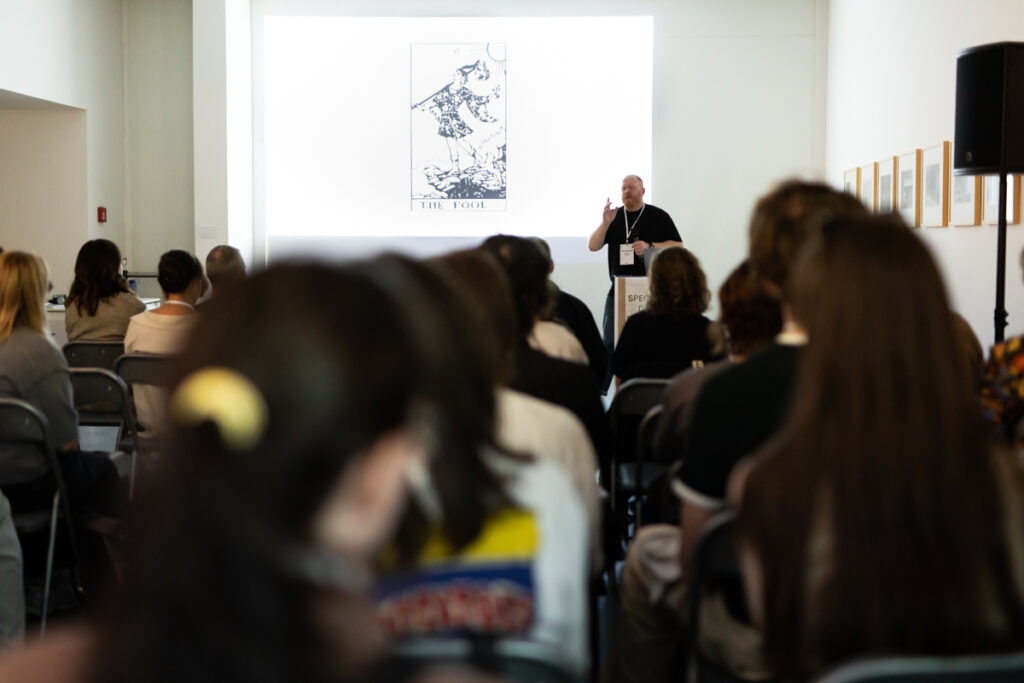
The colloquium opened with a keynote lecture by Matt Malpass (University of the Arts London), who traced the history of critical design as a practice that departs from design’s conventional alignment with market logics in favour of more interrogative and experimental modes of inquiry. Reflecting on the increasingly precarious conditions of the present, Malpass considered how speculative and critical approaches might remain socially and politically consequential in shaping future forms of design practice. In particular, he reflected on how the process of “mattering”, through transforming distant or abstract problems into shared responsibilities, might create conditions in which care, disagreement, and imagination can coexist long enough to unsettle what otherwise appears inevitable.
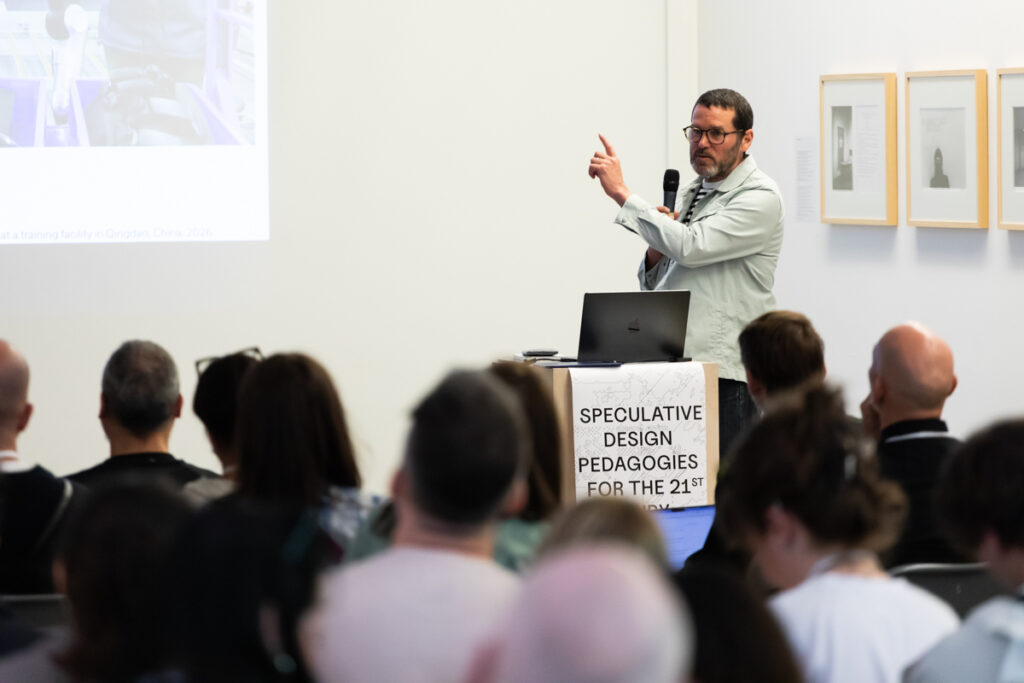
In the next session, James Auger (ENS/ENSCI) expanded on these questions by reflecting on the intellectual motivations behind the SUrF project. His lecture focused on how design might better engage with the systemic and often invisible constraints that shape the conditions under which designers work, forces that conventional design practice frequently either serves or leaves unquestioned.
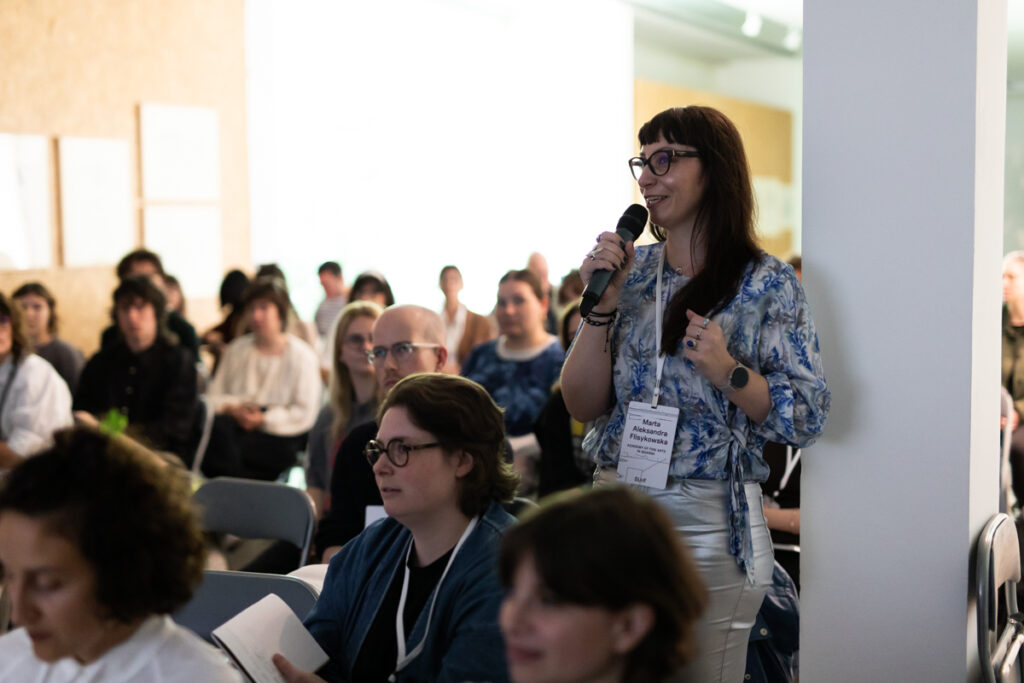
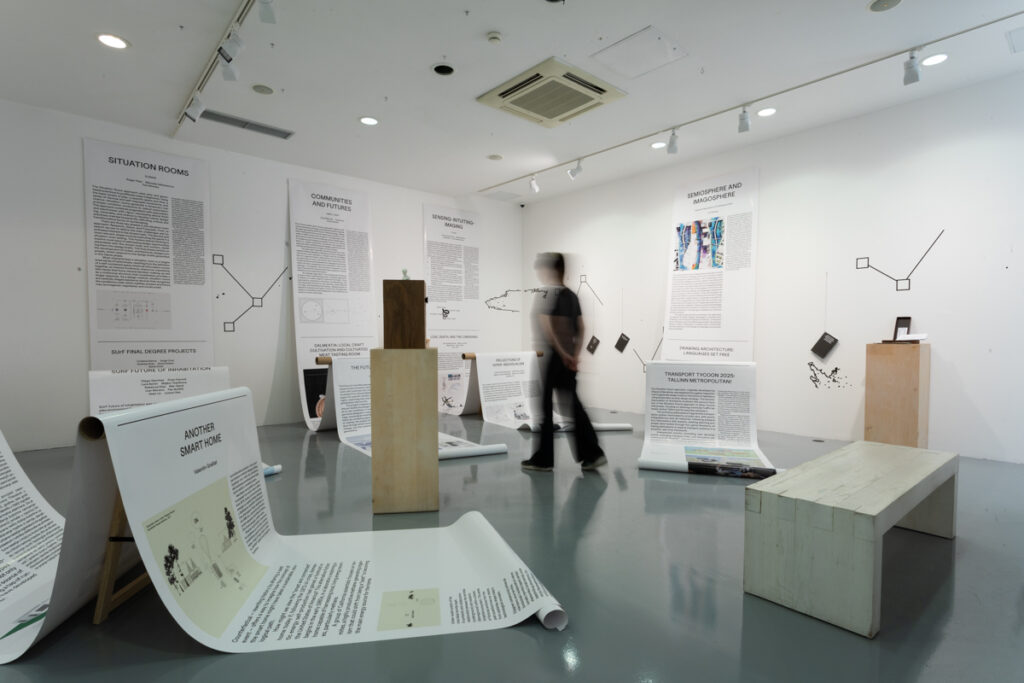
The five institutions participating in the SUrF consortium then presented the pedagogical approaches developed through the project. Emile De Visscher and Lorène Picard (ENS Paris-Saclay/ENSCI) presented the Counterfactual Histories approach, which asks students to modify a historical event and design evidence from the alternative present that would emerge as a consequence. Using speculative fiction and material practice, the approach encourages students to question inherited assumptions and values systems underpinning design culture. Roger Paez (Elisava) presented Situation Rooms, a game-based design approach in which participants work through constraints and chance, treating play as an epistemic tool for proliferating urban imaginaries and opening up new possibilities for design. Dora Vanette (Arts Academy, University of Split) presented the Communities and Futures approach, which positions local communities as active collaborators in exploring the implications of large-scale global transformations through speculative scenarios grounded in situated local contexts.
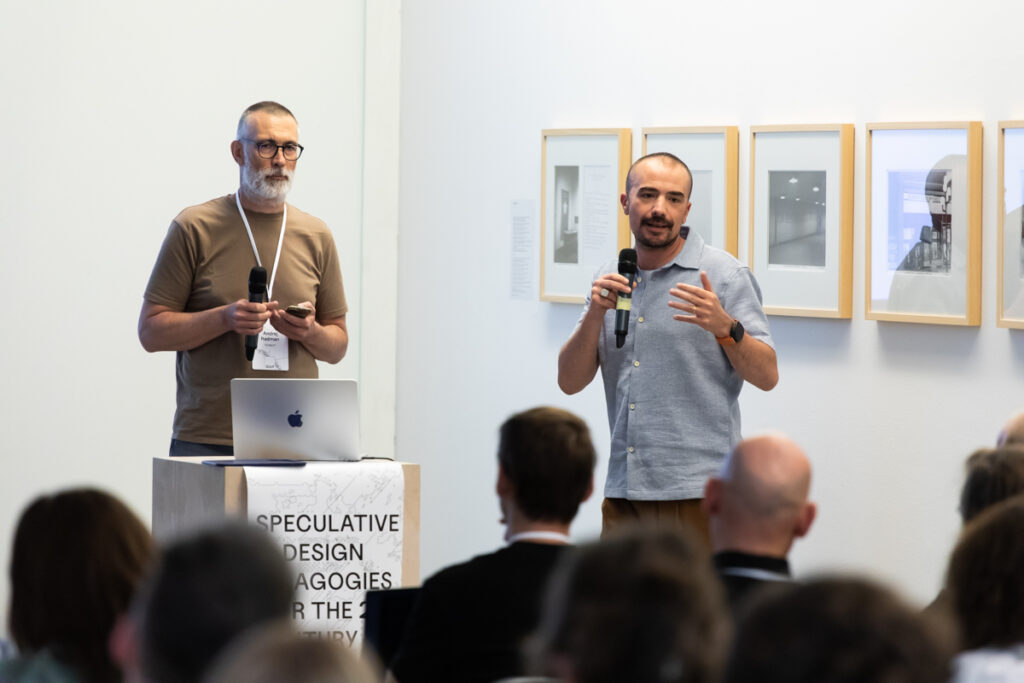
Stavros Kousoulas and Andrej Radman (TU Delft) presented Sensing–Intuiting–Imaging (SII), an approach grounded in Gilbert Simondon’s theory of images. Structured through a sequence of speculative outputs, the approach seeks to reclaim the designerly capacity for image-making. Jüri Soolep (Estonian Association of Architects) presented Semiosphere and Imagosphere, an approach that addresses the impact of AI on architectural practice. Through a comparative workshop structured around four different design languages, from hand drawing to AI prompting, the approach investigates the visual and linguistic systems that generative tools rely upon while also questioning the effects these systems can produce.
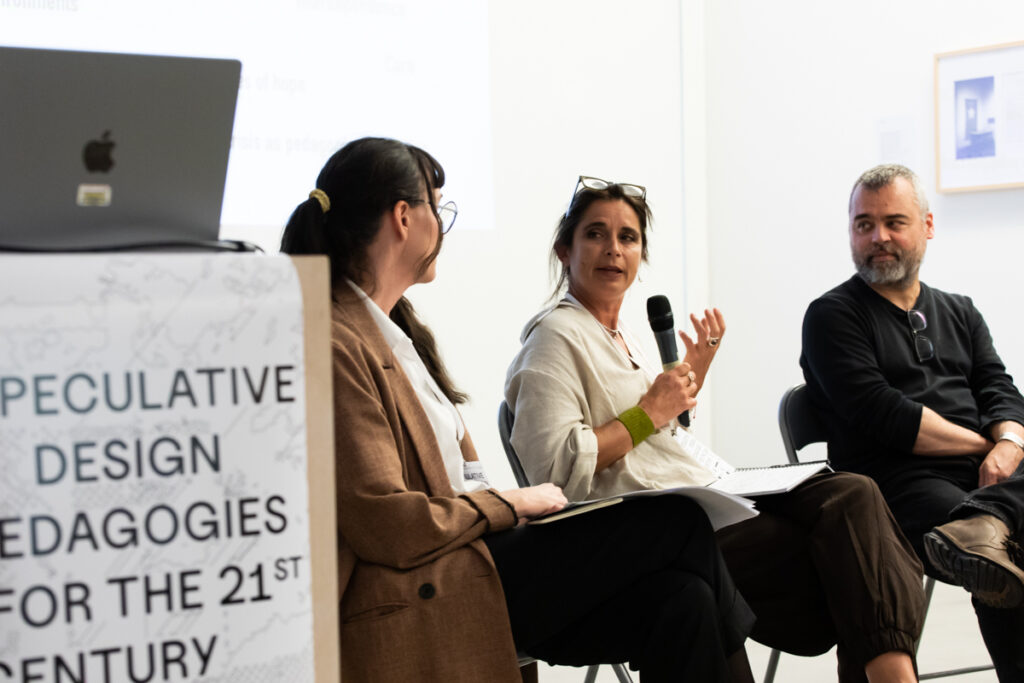
The afternoon programme continued with a lecture by Petra Lilja (Linnaeus University) who reflected on the intersections of her work as a designer, researcher, and curator. Lilja also moderated the subsequent panel discussion, which brought together Heidi Sohn (TU Delft), Mia Roth Čerina (Faculty of Architecture, University of Zagreb), Roger Paez (Elisava), and James Auger (ENS/ENSCI) for a panel discussion. The conversation turned on some of the fundamental tensions running through the day’s proceedings: the need to collapse the boundary between theory and practice in design education; the limitations of speculative design traditions that drift toward an abstract, self-contained logic disconnected from the realities it claims to address; and the importance of attending seriously to the conditions under which designers are working and teaching. A recurring theme was the question of agency: futures, the panellists argued, are not given but made, and design education has a responsibility to equip students with the tools to participate in their making. Rather than resolving these questions, the colloquium left them deliberately open, carrying the energy of the day’s debate into the workshop that followed.
In the following workshop, eighteen students and practitioners gathered at the Arts Academy to investigate speculative design through the lenses of performance, embodiment, and absurdist practice. Moving beyond solution-oriented methodologies, the workshop encouraged participants to explore humour, improvisation, and alternative modes of inquiry as tools for imagining possible futures. The workshop was led by Carmen Aguilar y Wedge (Hyphen-Labs), a Mexican-American artist, designer, and performing artist, assisted by Ela Raciti (Accademia di Belle Arti di Catania).
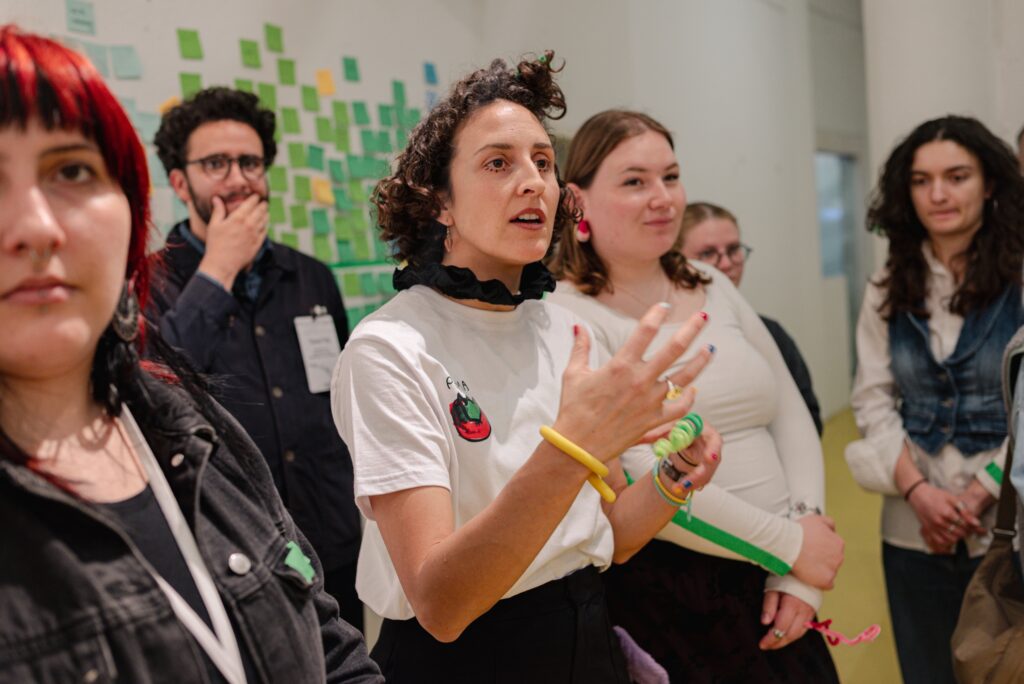
Through movement exercises, free writing, collaborative games, and experimental communication practices, participants examined the relationship between the body, language, and speculative thinking. Activities included identity exchange, collective improvisation, and exercises in deliberate misnaming, designed to disrupt habitual patterns of logic and perception. Participants then mapped personal, communal, and planetary values, identifying shared concerns that could serve as conceptual foundations for speculative artefacts and prototypes. Themes such as climate change, tourism, food systems, war, health, dating culture, and social disconnection emerged as recurring areas of investigation.
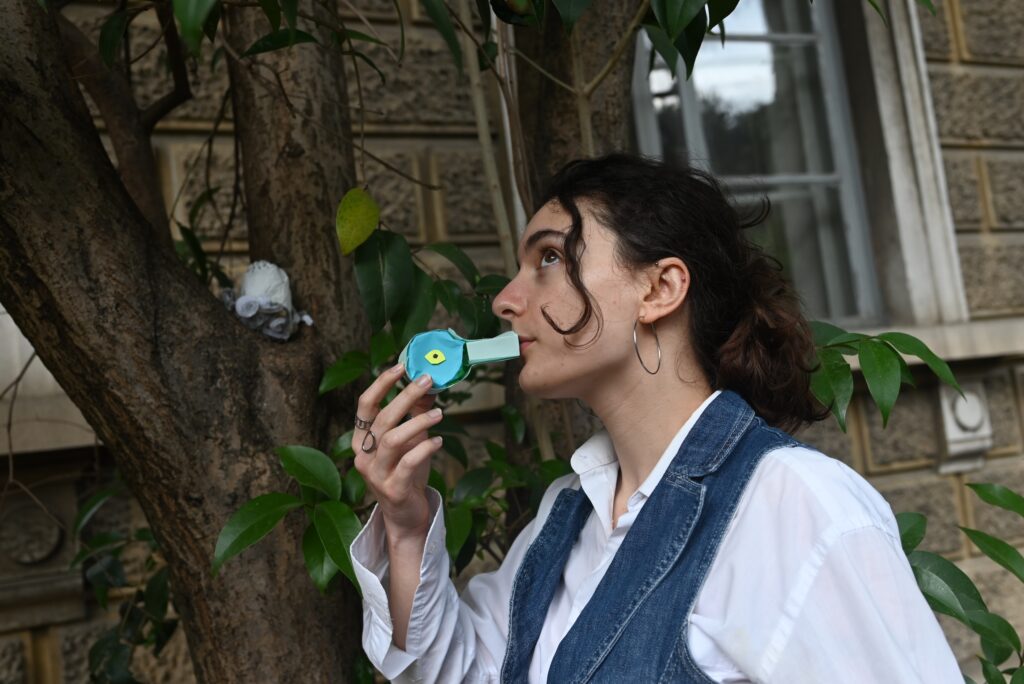
The workshop concluded with a public exhibition and discussion examining how humour, play, and embodied experimentation can expand contemporary speculative design practices. Among the works presented was Rosetta Pickle, a fictional preserved artefact exploring food preservation, encryption, and the weaponisation of culinary culture. Another project, The Cult of Souvenirs, proposed speculative objects designed to preserve the sensory memory of Split through taste, sound, and emotional experience.
The event was accompanied by an exhibition at the Museum of Fine Arts Split presenting outcomes from the SUrF project by showcasing the individual pedagogical approaches alongside selected case studies developed through them. The event also marked the presentation and distribution of the handbook Speculative Urban Futures: Five Design Approaches, which documents the project’s approaches and the case studies produced through their application.

Photos by: Gloria Lizde, Ela Raciti, Dora Vanette, Tereza Živković.
This event is part of the SUrF project funded by Erasmus+, the European Union programme for education, training, youth, and sport. The workshop is part of the HIP UMAS / IP-UNIST-57 project at the Arts Academy, University of Split, funded by the European Union – NextGenerationEU. The event is also supported by the Ministry of Culture and Media of the Republic of Croatia and the City of Split. The colloquium and exhibition are supported and hosted by the Museum of Fine Arts, Split.